Welcome to the TopShow!Garment manufacturing !

OEM, ODM Service,Custom color Custom logo,Custom Your Own Brand Online!

Leave Your Message
Request a Quote

China Best Denim Skirt Manufacturer for Wholesale Suppliers

Choosing a China denim skirt manufacturer can shape your product quality, margins, and customer trust. Wholesale suppliers need more than attractive samples. They need stable production, clear communication, and evidence of reliable quality control.

An experienced Denim Skirt manufacturer understands fabric weight, wash development, fit grading, and production planning. A 10-ounce cotton denim skirt may feel structured, while a lighter blend offers softer movement. Details matter. Waistband recovery, pocket alignment, hem strength, and bartack placement can affect returns. Factory teams should check shrinkage, colorfastness, seam strength, and measurements before bulk production. They should also provide practical sample feedback, not empty promises. Good partners explain minimum order quantities, lead times, packaging, and customization costs clearly.

Small flaws can appear.

A professional supplier accepts this reality. Sample fittings may reveal a tight hip, uneven wash, or twisted side seam. These issues should be recorded, corrected, and tested again. That process shows experience more clearly than polished photographs. Wholesale buyers should request inspection records, fabric details, compliance documents, and production references where available. A trustworthy China manufacturer will discuss limitations openly and protect consistency across repeated orders. Still, no supplier is perfect, and buyers must review every specification carefully. The strongest partnership grows through measurable standards, honest updates, and steady improvement. For retailers seeking dependable Denim Skirt collections, manufacturing expertise should support both commercial goals and long-term customer satisfaction.
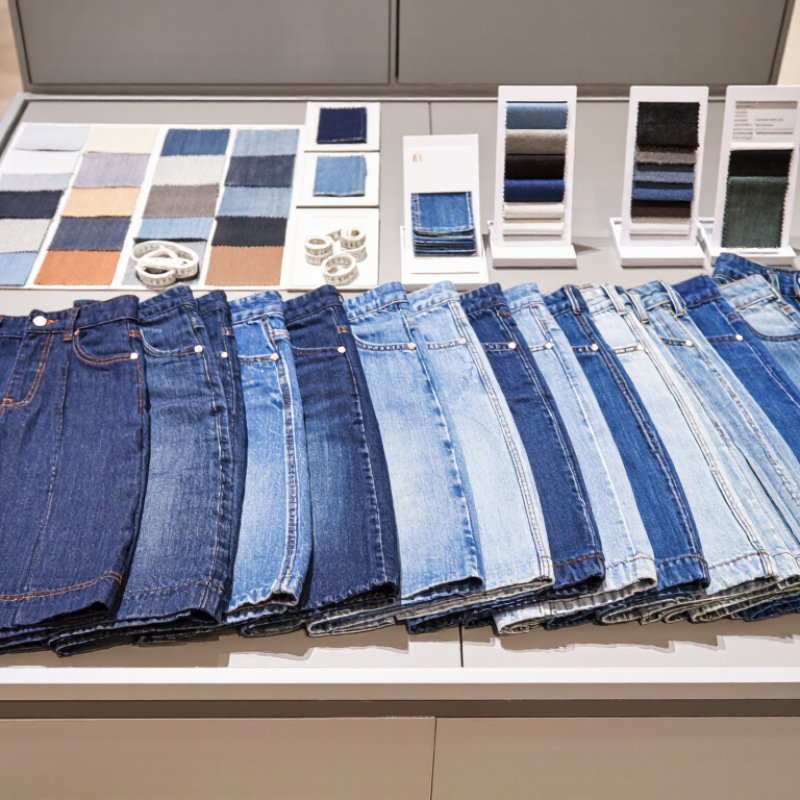
China Best Denim Skirt Manufacturer for Wholesale Suppliers

Denim Skirt Manufacturing in China: An Industry Overview

China’s denim skirt manufacturing sector serves wholesalers through a broad network of fabric mills, sewing workshops, and export-oriented factories.

Production is concentrated in established textile regions with strong access to cotton denim, trims, washing facilities, and skilled operators. Buyers can usually choose rigid denim, stretch blends, recycled fibers, or lighter summer weights.

A reliable factory begins with a clear tech pack.

It should confirm fabric weight, shrinkage, colorfastness, measurements, stitching density, and hardware specifications.

Sampling remains essential because denim can change after washing. A skirt may look accurate before treatment but become shorter or tighter afterward.

Fit still matters.

Factories commonly use enzyme washing, stone effects, tinting, and controlled abrasion to create different surfaces.

These processes require careful testing and wastewater management under applicable regulations.

Quality teams should inspect fabric faults, uneven seams, zipper function, waistband shape, and final measurements. I have found that simple inspection sheets often prevent expensive misunderstandings.

No factory gets every detail right.

A low sample price may hide weak communication or inconsistent grading. Wholesale suppliers should compare production records, sample revisions, lead times, minimum order quantities, and corrective-action procedures.

Ethical purchasing also requires practical checks on workplace safety, wage documentation, and material traceability.

Small details decide quality.

Key Criteria for Choosing a Reliable Denim Skirt Manufacturer

China Best Denim Skirt Manufacturer for Wholesale Suppliers

Choosing a reliable denim skirt manufacturer in China requires more than comparing prices. Wholesale suppliers need evidence of stable quality, practical experience, and responsible production control. Ask for fabric composition, weight, stretch recovery, and shrinkage results. A clear tech pack should define waist construction, pocket size, hem finishing, and approved measurements. Small details matter.

Request a pre-production sample before confirming bulk production. Then inspect stitching, zipper function, seam strength, and comfort during movement. Colorfastness should be tested after washing. A capable factory explains its method, not only its capacity. This distinction matters. Review several size sets because one attractive sample cannot prove consistent grading. Check whether the manufacturer can maintain the same wash effect across repeated orders.

Reliable communication is equally important. The manufacturer should confirm minimum order quantities, lead times, packaging, and revision procedures in writing. Regular quality reports, dated photos, and independent inspections can reduce uncertainty. Do not accept vague claims. A low quotation may hide weaker fabric or rushed sewing. A common buying mistake is trusting one perfect sample. Production can vary. No factory is perfect, but a dependable partner admits problems early and corrects them with measurable actions. This honesty often matters more than polished sales language.

China Best Denim Skirt Manufacturer for Wholesale Suppliers - Key Criteria for Choosing a Reliable Denim Skirt Manufacturer

Evaluation Dimension Recommended Benchmark Why It Matters How to Verify Priority
Product Specialization Demonstrated experience with denim skirts, including pencil, A-line, mini, midi, maxi, and utility styles. Specialized production knowledge helps improve fit, wash consistency, construction quality, and delivery reliability. Request recent product samples, construction photos, measurement charts, and a description of comparable production experience. High
Denim Fabric Options Fabric choices commonly ranging from approximately 6 to 14 oz, with options for 100% cotton, stretch blends, and recycled fibers. Fabric weight, fiber content, stretch recovery, and surface appearance directly affect comfort, durability, and retail positioning. Review fabric composition, weight test results, stretch-recovery results, color swatches, and applicable certificates. High
Pattern and Fit Development Ability to provide graded size specifications, pre-production samples, and fit comments before bulk manufacturing. Accurate grading and fit control reduce returns, alterations, and size-related customer complaints. Compare the approved measurement chart with sample measurements and request a documented sample-approval process. High
Minimum Order Quantity MOQ should be stated separately by style, color, and size range; smaller pilot orders are preferable for new buyers. Flexible MOQs help wholesalers test demand without excessive inventory exposure. Obtain written MOQ terms, including sample quantities, repeat-order quantities, and color-specific requirements. Medium
Wash and Finishing Capability Documented control of stone washing, enzyme washing, bleaching, tinting, whiskering, sanding, and garment-dye effects where applicable. Finishing processes determine the skirt’s appearance, hand feel, shrinkage, and color consistency. Request wash standards, shade bands, shrinkage data, sample approvals, and before-and-after wash comparisons. High
Quality Control System Written inspection procedures covering fabric defects, measurements, stitching, hardware, wash shade, labeling, and packaging. A structured quality system helps identify defects before shipment and supports consistent wholesale replenishment. Request inspection checklists, inline inspection records, final inspection reports, and defect-resolution procedures. High
Colorfastness and Durability Testing should address washing, rubbing, perspiration, dimensional stability, seam strength, and stretch recovery when relevant. Testing reduces the risk of excessive fading, dye transfer, distortion, and premature wear during use and laundering. Ask for recent laboratory reports and confirm the test methods, sample identity, test date, and pass criteria. High
Compliance and Restricted Substances Factory and product documentation should support the destination market’s labor, chemical, labeling, and product-safety requirements. Compliance reduces legal, customs, reputational, and retailer-onboarding risks. Check valid audit documents, chemical-management records, product test reports, and destination-market labeling capability. High
Sustainable Production Practices Evidence of water, energy, chemical, waste, and material-management practices, supported by verifiable documentation. Responsible production can support buyer requirements, reduce environmental impact, and improve supply-chain transparency. Request current certificates, wastewater records, fiber documentation, chemical policies, and material traceability information. Medium
Production Lead Time Lead time should be quoted separately for sampling, fabric sourcing, bulk production, washing, inspection, and shipment preparation. Clear scheduling helps wholesalers coordinate launches, promotions, seasonal assortments, and replenishment. Ask for a production calendar, capacity confirmation, holiday impact, approval deadlines, and late-delivery procedures. High
Packaging and Labeling Capability to follow buyer-approved folding, carton, polybag, barcode, care-label, fiber-content, and country-of-origin requirements. Correct packaging protects products in transit and supports warehouse receiving and retail compliance. Approve packaging samples and verify carton dimensions, packing ratios, labels, barcodes, and shipping marks before production. Medium
Communication and Documentation Reliable suppliers provide timely quotations, clear specifications, sample comments, production updates, and shipping documents. Accurate communication prevents misunderstandings about specifications, costs, approvals, and delivery responsibilities. Use a written specification sheet and evaluate response accuracy, update frequency, document completeness, and issue-resolution speed. High
Commercial Terms and Total Cost Quotation should identify fabric, wash, trims, labels, packaging, sampling, inspection, tooling, freight terms, and payment conditions. The lowest unit price may not produce the lowest total cost if quality issues, rework, delays, or hidden charges occur. Compare itemized quotations and calculate landed cost using the same specifications and shipping assumptions. High

Note: Benchmarks should be confirmed against the destination market, product specification, order quantity, testing standard, and agreed quality level.

How Wholesale Suppliers Can Evaluate Product Quality and Capacity

For wholesale suppliers, a denim skirt factory must prove quality beyond attractive samples. Start with fabric records. The Textile Exchange 2024 Materials Market Report estimates global fiber production reached 124 million tonnes in 2023, while cotton represented about 19%. This scale makes traceability and consistent fiber content important purchasing checks.

Request the fabric specification, including weight, weave, stretch percentage, and shrinkage results. Measure the waistband, hip, and length after three domestic washes. Check colorfastness against ISO 105 standards, especially at pocket edges and inner seams. Inspect bartacks, zipper alignment, hem density, and loose threads under strong light. Small defects become expensive returns. A perfect sample can still hide weak process control.

Capacity requires evidence, not promises. Compare the factory’s monthly cutting, sewing, washing, and finishing output with your order calendar. Review machine lists, operator shifts, recent delivery records, and the last twelve months of production data. The International Textile Manufacturers Federation’s 2024 Global Textile Industry Survey reported continued uncertainty across textile markets, so flexible scheduling deserves close attention. Ask for a pilot order before committing to volume. I have found that factories often report maximum capacity, not reliable capacity. That distinction matters. Check whether quoted output includes rework, inspection, and packing time. It usually does not.

China Best Denim Skirt Manufacturer for Wholesale Suppliers

How Wholesale Suppliers Can Evaluate Product Quality and Capacity

This normalized 100-point benchmark helps wholesale suppliers compare denim skirt manufacturers across product quality, quality-control traceability, monthly production capacity, on-time delivery, and replenishment flexibility. A supplier with balanced scores is generally better positioned for consistent wholesale orders and repeat production.

Customization, Sampling, and Production Steps for Denim Skirts

For wholesale suppliers, a reliable denim skirt program starts with clear customization details. Share target measurements, fabric weight, wash effect, hem shape, pocket layout, and expected order volume. Our production team reviews these points against available denim and factory capabilities. Stretch denim needs different cutting control than rigid cotton denim. Small changes matter. A two-centimeter waistband adjustment can affect comfort, grading, and material usage. We also confirm trims, thread color, labels, packing methods, and inspection standards before development begins.

Sampling turns a specification into something measurable. We usually create a development sample, then revise fit, wash, hardware placement, and stitching after review. A fitting session should check the waist, hip, front rise, skirt length, and side seam balance. Photos help, but physical measurement remains more dependable. A sample is rarely perfect. We have learned that dark washes may hide seam puckering until production, so wash testing and shrinkage checks should happen early. Approval should include a signed measurement sheet and clear comments.

After approval, production moves through fabric inspection, spreading, cutting, sewing, washing, pressing, and final quality control. Inspectors check shade consistency, broken stitches, zipper function, hem width, and measurement tolerance. Random checks during sewing can prevent larger rework later. Wholesale buyers should request a pre-production sample and an inspection report. Timelines can change when fabric or wash effects require correction. That is not always a failure, but ignoring the issue is. Good communication, traceable records, and realistic quantities help China-based denim skirt manufacturing remain stable from sampling to shipment.

Pricing, Compliance, and Shipping Considerations for Bulk Orders

Choosing China’s best denim skirt manufacturer requires more than a low FOB quote. Ask for a costed bill of materials, including denim weight, buttons, labels, washing, packing, and inspection. Cotton prices, energy, labor, and wash chemistry can shift margins quickly. Textile Exchange’s Materials Market Report 2024 recorded 124 million tonnes of global fiber production in 2023, highlighting a crowded and resource-intensive supply chain. Request fiber-content evidence and lot-level traceability. A cheaper fabric may fail shade, shrinkage, or colorfastness tests. That mistake is expensive.

For bulk orders, define compliance before sampling. Use restricted-substance testing aligned with the destination market. Keep records for azo dyes, heavy metals, formaldehyde, and nickel. Require a signed specification, measurement tolerance, approved sample, and pre-shipment AQL inspection. The factory should provide reports from a competent laboratory, not only internal claims. Review social-compliance audits carefully. One audit never proves ongoing performance. I have seen paperwork look complete while production details remained vague. That deserves a second check.

Tips: Compare landed cost, not unit price. Request quotations under the same Incoterm, currency, carton size, and payment terms. Confirm production capacity, holiday closures, and lead time in writing. UNCTAD’s Review of Maritime Transport reports that over 80% of world merchandise trade by volume moves by sea, so booking space early matters. Calculate freight, duties, insurance, port charges, and buffer stock. Shipping delays happen. Keep a contingency plan.