Welcome to the TopShow!Garment manufacturing !

OEM, ODM Service,Custom color Custom logo,Custom Your Own Brand Online!

Leave Your Message
Request a Quote

7 Tips for Buying Strap Pleated Jumpsuits

Buying a Strap Pleated Jumpsuit can feel simple until fabric, fit, and construction change the entire look. A polished photograph may hide a tight waist, weak straps, or pleats that flatten after one wash. This guide focuses on practical details that experienced shoppers often notice too late. Before choosing a style, consider where you will wear it, how you will move, and which fabrics match your climate.

Small checks matter. Run your fingers along the seams. Inspect the strap attachments, zipper, waistband, and hem for loose threads or uneven stitching. Pleats should fall evenly rather than twist across the hips. The fabric should recover after gentle movement, not cling uncomfortably when you sit. Measure your bust, waist, hips, and inseam, then compare them with the seller’s size chart. Do not rely on the label alone.

Comfort comes first.

Color and styling also deserve attention. Neutral shades offer more outfit options, while brighter tones can make the pleated design more noticeable. Check whether the jumpsuit works with your usual shoes, belt, and outer layers. Product reviews can reveal useful experiences, especially comments about transparency, shrinkage, and real-world sizing. Still, reviews are personal, not perfect evidence. One buyer’s relaxed fit may feel oversized on another body. Return policies, care instructions, and material details provide stronger protection when available. These seven buying tips will help you judge quality with clearer expectations, though even careful choices may require a little compromise.
7 Tips for Buying Strap Pleated Jumpsuits

Understand the Design and Key Features of Strap Pleated Jumpsuits

7 Tips for Buying Strap Pleated Jumpsuits

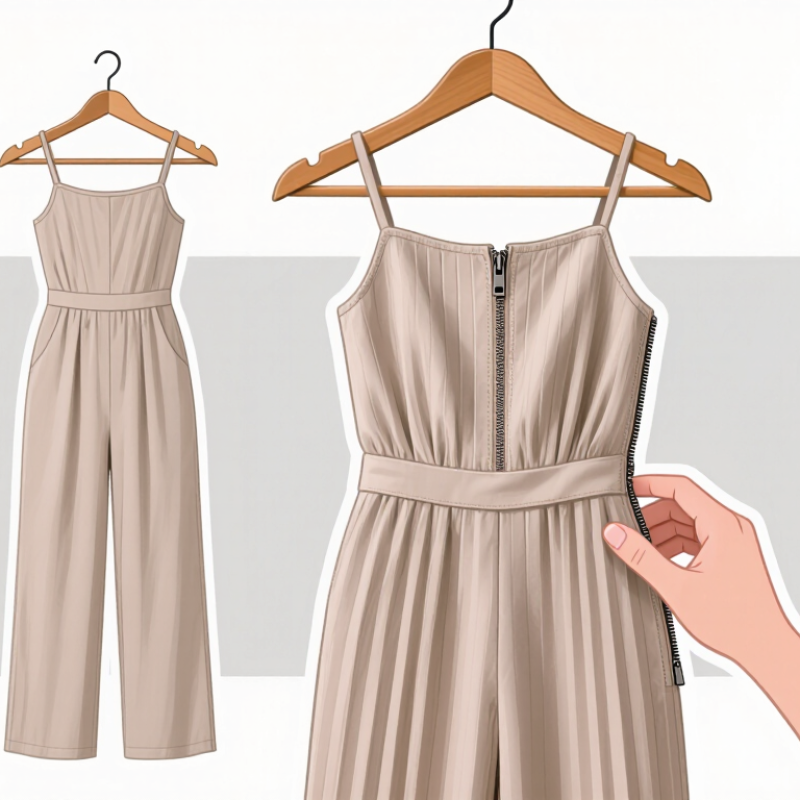
Understand the design before judging the silhouette.

Tip 1: Check strap adjusters for firm stitching and smooth movement.

Tip 2: Inspect pleat direction from the waist to the hem. Even spacing usually creates a cleaner line.

Tip 3: Look for a stable fabric blend, such as polyester with elastane, when you need shape retention and easy care.

Tip 4: Test the waist while sitting. A jumpsuit can look elegant while standing but pull uncomfortably when seated. Movement matters.

Tip 5: Examine the lining around the bust and waist. It should lie flat, without twisting beneath the pleats.

Tip 6: Confirm the closure length and bathroom practicality before purchasing. This detail is often ignored.

Tip 7: Read the care label carefully, because heat can flatten permanent pleats or weaken elastic fibers.

The WRAP report Valuing Our Clothes found that extending a garment’s life by nine months can reduce its carbon, water, and waste footprints by about 20–30%. Durability is not a minor feature.

The 2024 State of Fashion report from McKinsey and The Business of Fashion describes value-conscious shopping as a continuing industry pressure. That supports choosing construction over decorative detail. I sometimes prefer deeper pleats, but they may add visual volume around the hips. A mirror check from the side is useful. Pinch the fabric gently. Pleats should recover without obvious white stress lines. No garment is perfect; sizing charts can also be inconsistent, so compare actual measurements with a well-fitting jumpsuit you already own.

Choose the Right Fabric, Fit, and Size for Your Body

7 Tips for Buying Strap Pleated Jumpsuits

Choose the Right Fabric, Fit, and Size for Your Body

Tip 1: Check the fabric label before admiring the pleats. Textile Exchange’s Materials Market Report 2024 reported polyester at about 57% of global fiber production in 2023. Polyester holds pleats well and resists wrinkles, but it may feel warm. Look for breathable blends, such as cotton, linen, or viscose. Touch the inside fabric. Scratchiness becomes obvious there.

Tip 2: Test stretch at the bust, waist, and seat. Tip 3: Sit, bend, and raise both arms. A jumpsuit should move without pulling across the zipper. Tip 4: Measure your body, not your favorite garment. Record bust, natural waist, hips, and torso length. The torso matters most. If the crotch feels tight while standing, size up or choose a longer cut.

Tip 5: Compare those measurements with the seller’s chart, since clothing sizes vary widely. Tip 6: Use pleat direction strategically. Vertical pleats can create a longer visual line, while dense pleats may add volume. However, this effect depends on fabric weight and lighting. Tip 7: Check strap adjustment and seam placement. Straps should stay flat, not dig into your shoulders. The International Journal of Fashion Design, Technology and Education has documented inconsistent sizing across apparel markets, so relying on a usual size can be a costly mistake. I still sometimes choose by appearance first. That is the part worth reconsidering.

Match the Jumpsuit Style to Your Personal Wardrobe

A strap pleated jumpsuit should connect with clothes you already wear, not force a completely new identity. Check your wardrobe before shopping. If you often choose soft cardigans, cotton shirts, or neutral sneakers, select a jumpsuit with similar texture and calm colors. A dramatic style may look attractive online but feel awkward beside your daily pieces.

Study the straps, pleats, and waist shape carefully. Thin straps suit simple layering, while wider straps can balance a fuller shirt underneath. Pleats add movement, but they may also create extra volume around the hips. Try sitting, walking, and reaching before deciding. Comfort matters more than a perfect mirror pose. I once chose a beautiful jumpsuit with a tight waist, and I rarely wore it afterward.

Match the leg shape to your usual footwear. Wide legs work well with low-profile shoes, boots, or modest heels. Cropped legs can suit sandals and clean trainers. Keep accessories familiar, too. A small belt, simple earrings, or a worn-in jacket may make the outfit feel natural. Check the care label and fabric weight, especially if you expect frequent wear. Trends change. Your wardrobe habits reveal more.

7 Tips for Buying Strap Pleated Jumpsuits

Match the jumpsuit style to your personal wardrobe

Use this checklist to compare a strap pleated jumpsuit with your existing wardrobe. A higher score means the style is easier to coordinate with your current tops, layers, shoes, and accessories.

Check Construction Quality, Comfort, and Practical Details

7 Tips for Buying Strap Pleated Jumpsuits

Check the stitching around the straps, pleats, and side seams. Even, tight stitches usually indicate better construction. Gently pull each strap connection. It should feel secure, not fragile. Inspect the pleats from several angles. They should recover after light handling, although small irregularities can happen with handmade finishing. That detail deserves honest attention.

Try the jumpsuit while sitting, walking, and lifting your arms. A comfortable fit must work beyond the changing room. The straps should stay flat against your shoulders without digging in. Check whether the waist allows easy breathing. Fabric should skim the body, not cling awkwardly. I once chose a beautiful piece with a stiff waistband. It looked right, but daily movement proved otherwise.

Examine the fastenings and opening design. Can you dress independently without struggling? Test buttons, zippers, and adjustable straps several times. Look for useful pockets, but check their placement. A pocket that pulls the fabric forward is not practical. Consider fabric weight, especially for warm weather or long wear. Read the care label carefully. Pleated material may need gentle washing and careful storage. Also check transparency under bright light. Small flaws are acceptable; avoid ignoring problems that affect comfort, durability, or safe movement.

7 Tips for Buying Strap Pleated Jumpsuits: Check Construction Quality, Comfort, and Practical Details

Use this practical checklist to compare strap pleated jumpsuits before purchasing. Prioritize fit, fabric performance, stitching, and everyday usability rather than brand names.

Tip Key Dimension What to Check Useful Benchmark Quick Assessment Priority
1 Inspect the Fabric Review the fiber content, fabric weight, surface texture, and opacity. Pleated fabric should recover its shape after gentle movement and should not feel excessively stiff or scratchy. Choose a fabric suited to the season: breathable woven fibers for warm weather and a denser blend for cooler conditions. Check the care label before buying. Hold the fabric toward a light source, gently stretch it, and release it. Reject material that looks unusually sheer, pills immediately, or remains distorted. Essential
2 Evaluate Pleat Construction Look for pleats that are evenly spaced, consistently folded, and securely finished at the waist and hems. Uneven pleats may indicate poor cutting or pressing. Pleat lines should remain visually parallel across the front and back, with no obvious flattening, twisting, or loose threads. Lay the garment flat and compare both legs or panels. Gently compress and release the pleats to see whether they return without permanent creasing. Essential
3 Check Strap Adjustability Inspect sliders, rings, buttons, and strap attachment points. Adjustable straps should move smoothly and stay securely in place during wear. Straps should allow enough adjustment to position the neckline comfortably without pulling at the shoulders or gaping at the chest. Adjust both straps while wearing the garment. Raise your arms and bend forward; the straps should not slip, dig in, or expose more than intended. Essential
4 Assess Fit and Mobility Check the rise, waist placement, hip room, leg width, and overall length. A jumpsuit should allow sitting, walking, and reaching without excessive tension. Allow comfortable ease at the seat and thighs and make sure the crotch seam does not pull when sitting or climbing stairs. Try sitting, walking, squatting, and reaching overhead. Watch for horizontal stress lines, restricted movement, or fabric dragging at the inseam. Essential
5 Examine Seams and Finishes Inspect side seams, the waist seam, armholes, crotch seam, hems, and zipper area. Strong construction should look neat on both the inside and outside. Stitching should be even and secure, with no skipped stitches, open seams, excessive thread tails, or puckering around curved areas. Turn the garment inside out and lightly pull adjoining fabric panels. Seams should remain flat without visible gaps or popping stitches. Essential
6 Verify Closures and Bathroom Practicality Test zippers, buttons, snaps, and any back or side opening. Consider whether the garment can be removed easily when using the restroom. Closures should operate smoothly with one or two hands and should not catch the pleated fabric or create uncomfortable pressure points. Open and close every fastening several times. Check whether the opening is wide enough for easy dressing without forcing the straps or seams. Important
7 Review Pockets, Care, and Value Check pocket depth and placement, washing instructions, colorfastness guidance, wrinkle recovery, and whether the price matches the garment's construction. Pockets should hold small essentials without distorting the silhouette; care instructions should be realistic for your routine and available laundry facilities. Place a phone or keys in each pocket, read the full care label, and compare construction quality with similar non-branded options. Helpful
Final buying check: Confirm the retailer's measurement chart, return window, and garment-specific care instructions. For pleated designs, follow the care label carefully because high heat and aggressive ironing can permanently affect the pleat structure.

Compare Prices, Care Requirements, and Return Policies

7 Tips for Buying Strap Pleated Jumpsuits

Tip 1: Compare the full price, not only the displayed figure. Add shipping, taxes, alteration costs, and possible return fees before choosing. Tip 2: Check identical details across several sellers, including fabric blend, lining, pleat quality, and strap adjustment. A cheaper jumpsuit may use thinner material or less stable pleats. Tip 3: Read measurements carefully. I measure my bust, waist, hips, and inseam before ordering, but fit can still vary between cuts. That part is frustrating.

Tip 4: Inspect the care label before paying. Some pleated fabrics need gentle washing, low heat, or professional cleaning. Avoid assuming “easy care” means no effort. Tip 5: Consider storage. Hanging a pleated jumpsuit on a padded hanger can help protect its shape, while crowded wardrobes may flatten the folds. Tip 6: Review the return policy line by line. Confirm the return window, unworn requirements, attached tags, refund method, and return-shipping responsibility. “Free returns” can still exclude clearance items or customized alterations.

Tip 7: Save screenshots of the product page and policy. Details may change after purchase. Photograph the parcel and inspect seams, straps, stains, and pleats immediately. If the jumpsuit feels tight when sitting, do not rely on stretching later. I once overlooked the inseam and regretted it. A slightly higher price can be sensible when the material, care instructions, and return process are clearly documented.