Welcome to the TopShow!Garment manufacturing !
OEM, ODM Service,Custom color Custom logo,Custom Your Own Brand Online!

Leave Your Message
Welcome to the TopShow!Garment manufacturing !
OEM, ODM Service,Custom color Custom logo,Custom Your Own Brand Online!
A Floral Floor Length Dress can anchor a summer collection, occasionwear range, or online boutique’s seasonal edit. Yet a striking print is only part of the buying decision. Retailers also need dependable fabric, consistent color, accurate sizing, and clear production timelines. A sample may look beautiful under studio lights. The same fabric can feel different in daylight.
Market conditions make careful sourcing useful. McKinsey and The Business of Fashion’s State of Fashion 2024 report projected global fashion-industry growth of 2 to 4 percent that year. This broad forecast offers context, not a specific measure of floral dress demand. Buyers should still compare suppliers using current samples, written specifications, and direct questions about minimum orders and lead times. Small checks matter.
This guide introduces ten China-based floral floor-length dress suppliers for further evaluation. It considers product range, customization options, communication, and practical sourcing details, rather than treating a ranking as a guarantee. Supplier capabilities can change, and public listings may not confirm factory ownership or production capacity. That deserves a second look. Before placing an order, request a recent sample, confirm fabric composition, and review print placement across sizes. Clear evidence beats polished catalog photos.
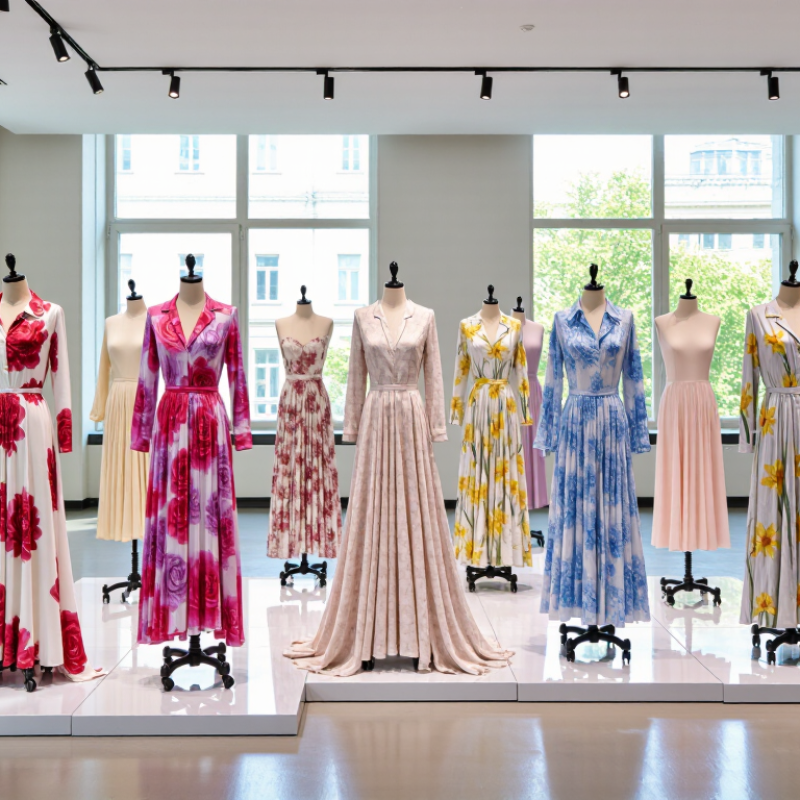
A floral floor-length dress supplier is defined by control, not just a large print library. It should provide clear fabric details, including fiber content, weight, lining, and print method. Ask for a physical swatch and a finished sample. Check whether the hem hangs evenly, the floral pattern aligns across seams, and the fabric remains opaque under light. Small details matter. Reliable suppliers also share size charts, measurement tolerances, sample timelines, minimum order quantities, and production lead times in writing. A polished catalog is not proof.
Material knowledge matters, too. Textile Exchange’s Materials Market Report 2024 estimates that global fiber production reached 124 million tonnes in 2023, with polyester making up 57 percent. This scale makes traceable fiber information useful when comparing suppliers. Ask for supporting documents behind material and sustainability claims, plus relevant colorfastness and shrinkage test results. For long skirts, a few centimeters of shrinkage can change the intended floor-length fit. Review a pre-production sample before approving bulk work. Even then, one sample may not reveal every production inconsistency; that limitation deserves attention. A capable supplier explains how it checks fabric lots, print placement, stitching, and final measurements—and how it handles defects when they occur.
Use these ten criteria to compare suppliers. The table describes evaluation points rather than ranking or making claims about specific companies. Confirm specifications, costs, and timelines directly with each prospective supplier.
| No. | Supplier evaluation dimension | What to check | Useful evidence or measure |
|---|---|---|---|
| 1 | Long-dress pattern and construction capability | Experience making floor-length styles with the requested silhouette, neckline, sleeves, lining, and closures. | Review comparable samples, construction details, and a written measurement specification for each size. |
| 2 | Floral print development | Ability to work with supplied artwork or develop a print, and to control color, scale, and repeat placement. | Request a print strike-off or fabric swatch and approve the print scale and color before bulk production. |
| 3 | Fabric and trim sourcing | Availability and consistency of the requested shell fabric, lining, thread, buttons, zippers, and other trims. | Confirm fiber content, fabric weight, width, color, and approved substitutes in writing; request swatches. |
| 4 | Fit and size grading | How the supplier develops the base-size sample and grades measurements across the requested size range. | Check a size chart, sample measurement report, and fit comments against the buyer’s approved specification. |
| 5 | Sample and revision process | Process for reviewing the first sample, recording changes, and approving the pre-production sample. | Agree on sample charges, revision scope, approval steps, and sample timing before placing an order. |
| 6 | Minimum order quantity and order flexibility | Minimum quantities may differ by style, fabric, print, color, and whether materials are custom-made. | Obtain a written MOQ by style and color, plus any surcharges for smaller runs or custom materials. |
| 7 | Production planning and delivery | Whether the supplier can provide a production schedule covering material sourcing, cutting, sewing, inspection, and packing. | Request confirmed sample and bulk lead times, the planned ship date, and written notice procedures for delays. |
| 8 | Quality control | Inspection of measurements, seams, print alignment, stains, trims, labels, and finished-garment appearance. | Ask for inspection procedures and reports. If using AQL sampling, agree on the inspection standard and acceptance limits in advance. |
| 9 | Labeling and market requirements | Ability to apply buyer-approved care, size, fiber-content, and country-of-origin information for the destination market. | Provide the destination-market requirements and verify label wording and placement on a sample before production. |
| 10 | Packaging and shipment documentation | Packing method, carton details, shipping terms, and ability to prepare documents required for the agreed shipment. | Confirm folding or hanging requirements, carton dimensions, packing list details, and the agreed Incoterms® rule. |