Welcome to the TopShow!Garment manufacturing !
OEM, ODM Service,Custom color Custom logo,Custom Your Own Brand Online!

The Corset Top has moved from a statement piece to a familiar option in everyday fashion. Its appeal is easy to see: a shaped bodice defines the waist, while structured seams create a clean, deliberate silhouette. Some designs use lacing or boning; others borrow the look with flexible panels and stretch fabric. The details vary.
That range helps explain its popularity. A fitted top can work with wide-leg trousers, a soft skirt, or worn-in denim, changing character with each pairing. At a fitting, the difference often comes down to small details: where the neckline sits, whether the fabric pulls when you sit, and how securely the top stays in place. These practical considerations matter as much as appearance.
Still, popularity does not guarantee comfort or a good fit. A rigid bodice may feel restrictive, while a lightly structured version can offer more ease. Fabric quality, adjustable closures, and accurate sizing all affect how a top feels over several hours. There is no single Corset Top that suits everyone.
This article explores why the style keeps drawing attention, from its striking shape to its adaptability across outfits and occasions. It also considers what shoppers should look for before choosing one. Trends can be persuasive. Fit is personal. And sometimes, a beautiful top looks better on a hanger than it feels at dinner.
What Defines a Corset Top?
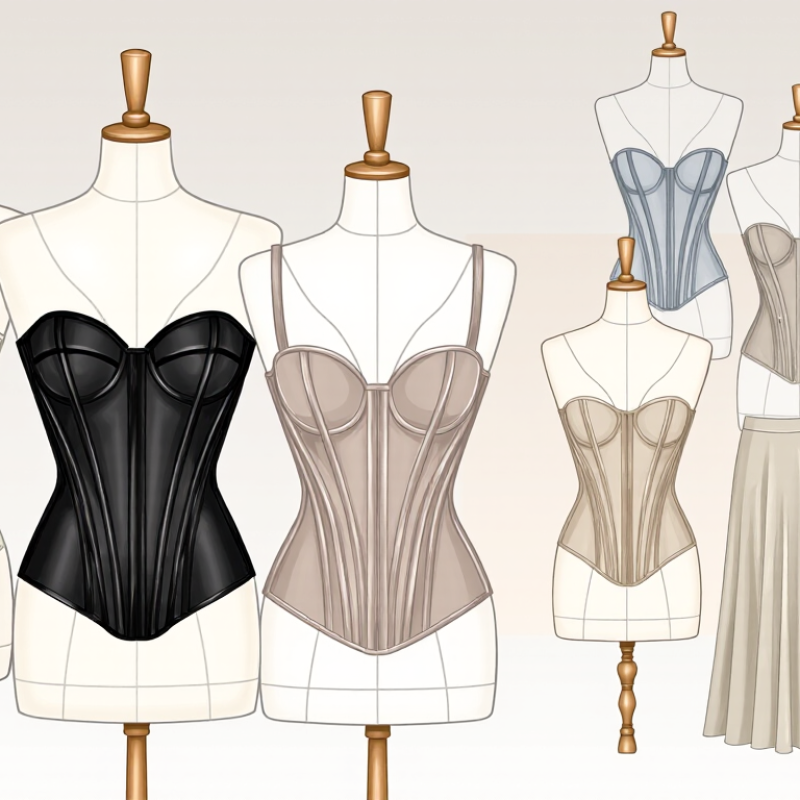
A corset top is defined by its shape and construction, not merely by a fitted look. Traditional corsets use shaped panels and supportive channels, often with lacing or a firm closure. Modern corset tops may borrow these details while using lighter fabric and flexible seams. Some include boning; others use decorative stitching that only suggests structure. The difference is easy to miss on a hanger.
Fit matters. A structured top should sit smoothly against the torso, without sharp pressure or fabric pulling at the closure. Look closely at the seams, lining, and fastenings: these details reveal whether the garment offers support or mainly creates a corset-inspired silhouette. There is no single universal standard for the term, so product descriptions can be vague. I would not assume that every “corset top” provides waist support.
The broader shapewear market offers useful context, but it is not a measure of corset tops alone. Grand View Research estimated the global shapewear market at USD 2.26 billion in 2023 and projected a 7.7% compound annual growth rate from 2024 to 2030. That figure reflects a larger category. It helps explain interest in sculpted silhouettes, but it cannot prove why any one style becomes popular. A close look at construction still tells more.
Why Is the Corset Top So Popular?
How the Corset Top Evolved into Modern Fashion
The corset top carries a long history, but its role has changed. Early corsetry shaped clothing beneath outer layers, using stiffened fabric and lacing to create a fitted silhouette. In later centuries, corsets became closely associated with formal dress and tightly structured waists. They were not always comfortable. That matters when we talk about their appeal today.
As dressmaking changed, lighter fabrics and different undergarments gradually offered more freedom of movement. The corset’s recognizable details—seaming, boning, and lace-up backs—did not disappear. Designers began bringing them into view, turning construction into decoration. A visible seam could suggest structure without requiring a rigid, full-length garment. Fashion does not move in a straight line, though; old shapes often return with new meanings.
Today, a corset top may be made with flexible panels, mesh, satin, or denim, and worn with trousers, skirts, or an open jacket. Some versions prioritize support; others borrow the silhouette purely for style. Fit still deserves attention: a top should feel secure, not painful, and breathing should remain easy. The modern corset is part garment, part historical reference. Its popularity may come from that tension—between restraint and self-expression—though the look can feel more symbolic than practical.
How the corset evolved from structured undergarment to modern fashion statement
Corset-inspired fashion has repeatedly adapted to changing ideals of shape and dress. Today’s corset top draws on that history while often being worn as an outer layer. Dates are approximate, except for the 1914 brassière patent.
Why Is the Corset Top So Popular?
Which Design Features Shape Its Look and Fit?
A corset top’s shape comes from its panels, seams, and neckline. Vertical seams guide the eye toward the waist, while curved panels can follow the ribs and hips. Structured boning helps the fabric hold its outline, but too much stiffness may pinch when sitting. The effect is tactile: firm edges, close shaping, and a defined waist. Fit depends on the wearer, not just the garment’s size label.
Lacing allows some adjustment, while a zip closure gives a cleaner finish but less flexibility. Fabric matters, too. A small amount of stretch can ease movement; rigid woven fabric usually needs more precise sizing. Grand View Research’s 2023 shapewear report estimated the global market at USD 2.6 billion in 2022, with projected growth through 2030. This is category-wide data, not a corset-top sales figure, but it signals continued interest in sculpting garments. A common design trade-off remains: dramatic structure can look striking yet feel restrictive over a full day.
Tips: Check the top while seated and standing. Make sure the boning lies flat, the neckline stays put, and breathing feels easy. Don’t size down just to force a sharper silhouette; that can distort the panels. Corset tops can look slightly uneven on different bodies, and that’s worth remembering.
| Design feature | How it shapes the look | Effect on fit | What to check |
|---|---|---|---|
| Vertical boning | Creates visible vertical lines and a structured silhouette. | Helps the garment keep its shape; the amount of support depends on the boning and overall construction. | Check whether the channels feel smooth and whether the garment allows comfortable movement. |
| Panel seams and shaping | Seams can emphasize the waist and create a contoured, tailored appearance. | Curved panels influence how closely the top follows the torso; fit varies by pattern and body shape. | Look for seams that lie flat without pinching, pulling, or gaping. |
| Neckline shape | Sweetheart, straight, and square necklines each create a different visual frame for the upper body. | Neckline height and edge shape affect coverage and how securely the top sits across the chest. | Check coverage and stability when sitting, reaching, and moving. |
| Back closure | Lacing can make the back a focal detail; a zipper or hook closure gives a cleaner finish. | Adjustable lacing can accommodate some variation in fit, while fixed closures offer less adjustment. | Confirm that the closure is secure and that any lacing can be adjusted without creating uneven tension. |
| Fabric and lining | Satin, cotton, denim, and other fabrics change the finish, texture, and formality of the top. | Fabric weight, lining, and stretch influence comfort, breathability, and how closely the top follows the body. | Read the care label and check whether the fabric has stretch if that matters for your fit preference. |
| Cup construction | Seamed, molded, or unstructured cups give the bust area different contours and finishes. | Cup shape and depth affect coverage and how the top accommodates the bust. | Check for gaping, compression, or edges that dig in; cup fit can vary between styles. |
| Straps or strapless construction | Straps add a visible styling detail; a strapless design leaves the shoulders uncovered. | Straps can contribute to support and stability. Strapless styles rely more on their structure and fit around the torso. | For strapless styles, check that the top stays in place without needing frequent adjustment. |
| Hem length | A cropped hem highlights the waist; a longer hem can create a more continuous, bodice-like line. | Length affects where the top meets the waistband and whether it shifts during movement. | Compare the hem placement with your preferred trousers, skirt, or layering pieces. |
Fit note: A fashion corset top is not automatically designed for waist training. Comfort and support depend on the specific garment’s construction, sizing, and intended use.
People choose corset tops for shape, styling, and the feeling of a more defined silhouette. A structured bodice can sit neatly with wide-leg trousers, or add contrast to a soft, flowing skirt. Some designs use flexible panels and lighter construction, while others feel firm around the ribs. Check the fabric, closure, and care instructions before buying; a polished look is less appealing if the top pinches after an hour. Fit can be fussy.
Market reports offer useful context, but they do not prove why each person buys one. Grand View Research valued the global shapewear market at USD 2.26 billion in 2023 and projected 7.7% annual growth from 2024 to 2030. Allied Market Research estimated the global intimate-wear market at USD 38.9 billion in 2020, forecasting USD 59.5 billion by 2030. These categories are broader than corset tops, so the figures should not be read as sales data for this item alone. Still, they suggest sustained interest in clothing that shapes or supports the body. For wearers, the appeal may be practical, aesthetic, or both. A corset top can make an outfit feel considered, though it is not automatically comfortable or flattering for everyone.
Pop culture has made corset-inspired tops visible far beyond formalwear. Period dramas and music performances often pair structured bodices with flowing skirts, creating a striking contrast on screen. Red-carpet looks and short-form videos then bring similar shapes into everyday outfit inspiration. Pinterest’s 2022 trend report recorded a 90% year-over-year rise in searches for “corset tops.” That figure measures search interest, not purchases, but it shows how quickly the silhouette caught attention. A fitted waist and visible seams read clearly on a small screen. It felt theatrical.
The look also allows different interpretations. Some wear it over a crisp shirt; others choose a soft knit version with loose trousers. Those combinations make a historically recognizable shape feel more casual and personal. Popular culture has helped normalize that styling, though social feeds can make one narrow body ideal seem universal. That deserves reflection. A well-made top should feel secure when sitting, breathing, and moving—not only look polished in a photograph. Fit varies widely, and stiff structure is not comfortable for everyone. Corset tops remain popular partly because they offer visual drama, but their appeal is stronger when wearers can adapt the shape to their own comfort and style.