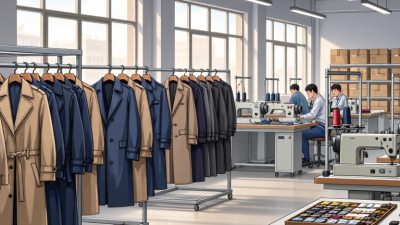
Welcome to the TopShow!Garment manufacturing !

OEM, ODM Service,Custom color Custom logo,Custom Your Own Brand Online!

Leave Your Message
Request a Quote

Top 10 Long Trench Coat Manufacturers and Suppliers

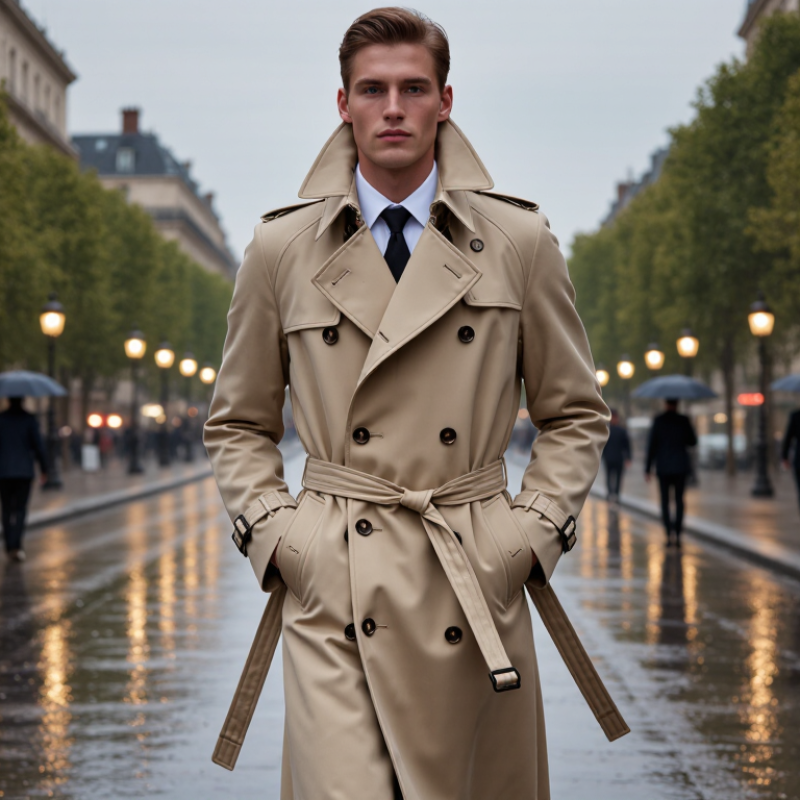
A Long Trench Coat can look effortless on a rainy pavement, but producing one well takes careful decisions. The weight of the fabric, the drape across the shoulders, and the feel of the belt all matter. Details matter.

Industry reports offer useful context, though they do not isolate trench coats as a separate market. The Business of Fashion and McKinsey’s The State of Fashion 2024 projected global fashion growth of 2–4% for that year. Textile Exchange reported that global fiber production reached 124 million tonnes in 2023. These figures do not prove demand for any particular coat; they do show why material sourcing and supplier capability deserve close attention.

British designer Hardy Amies once advised, “A man should look as if he has bought his clothes with intelligence, put them on with care and then forgotten all about them.” His words are about personal style, not trench-coat manufacturing, but the idea fits: a good coat should feel considered without looking fussy. Fit matters. Yet no supplier can be judged from a polished product photo alone. Construction quality, fabric options, order requirements, and communication all need checking, and this overview cannot replace direct verification. The manufacturers and suppliers below offer a starting point for buyers comparing long trench coat partners.
Top 10 Long Trench Coat Manufacturers and Suppliers

What Defines a Long Trench Coat Manufacturer or Supplier

A long trench coat manufacturer does more than sew a longer hem onto a standard coat. It develops patterns that preserve movement and balance across the body. The front should close smoothly, while the back vent must allow a comfortable stride. Small details matter. A reliable maker can explain its fabric options, grading process, lining choices, and production checks in practical terms. Ask how it tests button strength, seam alignment, and water resistance, if that feature is part of the design. Clear answers are more useful than broad claims.

A supplier may manufacture coats directly or coordinate orders from production partners. Buyers should clarify this difference, along with minimum quantities, sample timing, and how fabric changes affect delivery. Requesting a sample can reveal details that a specification sheet misses, such as stiff cuffs or a collar that loses shape. Ask for proof. Consistency across sizes and repeat orders is also worth checking. No supplier is perfect, and a sample may not match bulk production exactly. Discuss how defects are recorded and corrected before placing a larger order. A careful conversation about limits often tells you more than a polished catalog.


How to Evaluate Long Trench Coat Manufacturing Capabilities

Top 10 Long Trench Coat Manufacturers and Suppliers

How to Evaluate Long Trench Coat Manufacturing Capabilities

A capable factory should prove that its trench coat sample can be repeated at scale. Ask for a size-set sample, graded patterns, and a production schedule. Check shoulder alignment, collar symmetry, button spacing, and belt-loop reinforcement on a physical garment. Small details reveal process control. Request fabric test records, including spray testing under ISO 4920 and seam-strength testing under ISO 13935-2. A water-repellent finish may weaken after care, so ask how performance is checked after washing.

Material traceability also deserves scrutiny. Textile Exchange’s Materials Market Report 2024 estimates global fiber production reached 124 million tonnes in 2023, with growth projected to 160 million tonnes by 2030. In a crowded supply chain, a supplier should identify fabric composition, mill origin, and available supporting documents. Compare those records with the actual fabric lot. One uncomfortable point: a polished sample can hide inconsistent bulk production. Recheck measurements and workmanship from a pilot run.

Top 10 Long Trench Coat Manufacturers and Suppliers

A useful comparison of the top 10 long trench coat manufacturers and suppliers should look beyond price and sample appearance. Check whether each supplier can handle your target fabric, size range, order quantity, and delivery schedule. Ask for a bill of materials and fabric test results. For a long coat, inspect hem balance, sleeve movement, pocket reinforcement, and belt-loop stitching. Small defects become obvious across a full-length silhouette.

Material sourcing deserves close attention. Textile Exchange’s Materials Market Report 2024 estimates that global fiber production reached 124 million tonnes in 2023. That scale makes clear, verifiable sourcing information important. Ask suppliers to identify fiber content and provide available traceability records. Request test details for water repellency, colorfastness, and seam strength; treatment performance can vary by fabric and finish. A supplier’s broad sustainability claim is not a substitute for documentation.

Compare the ten candidates using the same sample brief and measurement chart. Include lining composition, button attachment, care instructions, and tolerance limits. Request a pre-production sample in the intended fabric, not merely a similar substitute. Check the coat after sitting, walking, and raising both arms. A neat showroom sample can still conceal tight armholes or a twisting lining. That is easy to miss. Review production capacity and quality-control steps in writing, then confirm them against the sample.

Typical Moisture Regain of Trench Coat Fibers

Moisture regain is the approximate amount of moisture a fiber absorbs from the air, expressed as a percentage of its dry weight. Typical reference values are shown; actual fabric performance varies with blends, construction, and finishing.

Comparing Product Range, Customization, and Minimum Order Quantities

Long trench coats vary in fabric weight, lining, length, and hardware, so compare suppliers by actual product range. Ask for specifications, not just catalog photos: a 280-gram cotton blend hangs differently from a lightweight recycled-polyester shell. Textile Exchange’s Materials Market Report 2024 estimated global fiber production at 124 million tonnes in 2023. That scale makes material choice important, but it does not guarantee a supplier stocks your preferred fabric. Request swatches and confirm whether samples match bulk production. Small details matter.

Customization can include sleeve length, storm flaps, belt width, lining, labels, and packaging. Ask which changes use existing patterns and which require new development; the latter can affect sampling time and cost. Minimum order quantities need equally careful comparison. A factory may set one minimum for a style, then separate minimums for each color or fabric. Request the figures in writing, including sample charges, size ratios, and repeat-order terms. A low headline MOQ can become less useful when every color requires a separate commitment. Comparing quotes is imperfect, too: suppliers may include different finishing or inspection steps. A simple spreadsheet helps, but it cannot replace checking a pre-production sample under natural light.

How to Choose a Supplier for Your Business Needs

Choosing a long trench coat supplier starts with a clear product brief. Specify the intended fabric weight, lining, length, closure, and available size range. Ask how measurements are checked, especially sleeve length and shoulder width. Small differences can affect fit across a full size run. Ask for a sample before approving bulk production. Feel the fabric, test the buttons, and inspect the belt loops and seams. Details matter.

A supplier’s production process should fit your order volume and calendar. Request written estimates for minimum quantities, sample fees, production time, and shipping preparation. Ask what happens if a sample or finished batch misses the agreed specifications. Clear answers are useful. Vague promises are not. Check whether the supplier can share recent inspection records or explain its quality-control steps. A tidy showroom tells you little about consistency on the sewing floor.

Communication deserves a practical test. Send a short list of questions and note whether replies address each point. Discuss how fabric substitutions, delays, and design changes will be approved. Compare more than the unit price; payment timing, packaging, and defect handling also affect costs. I would not treat one successful sample as proof of reliable bulk work. That assumption is easy to make, and sometimes wrong. Keep specifications and approvals in writing, then review them with the supplier before placing a larger order.